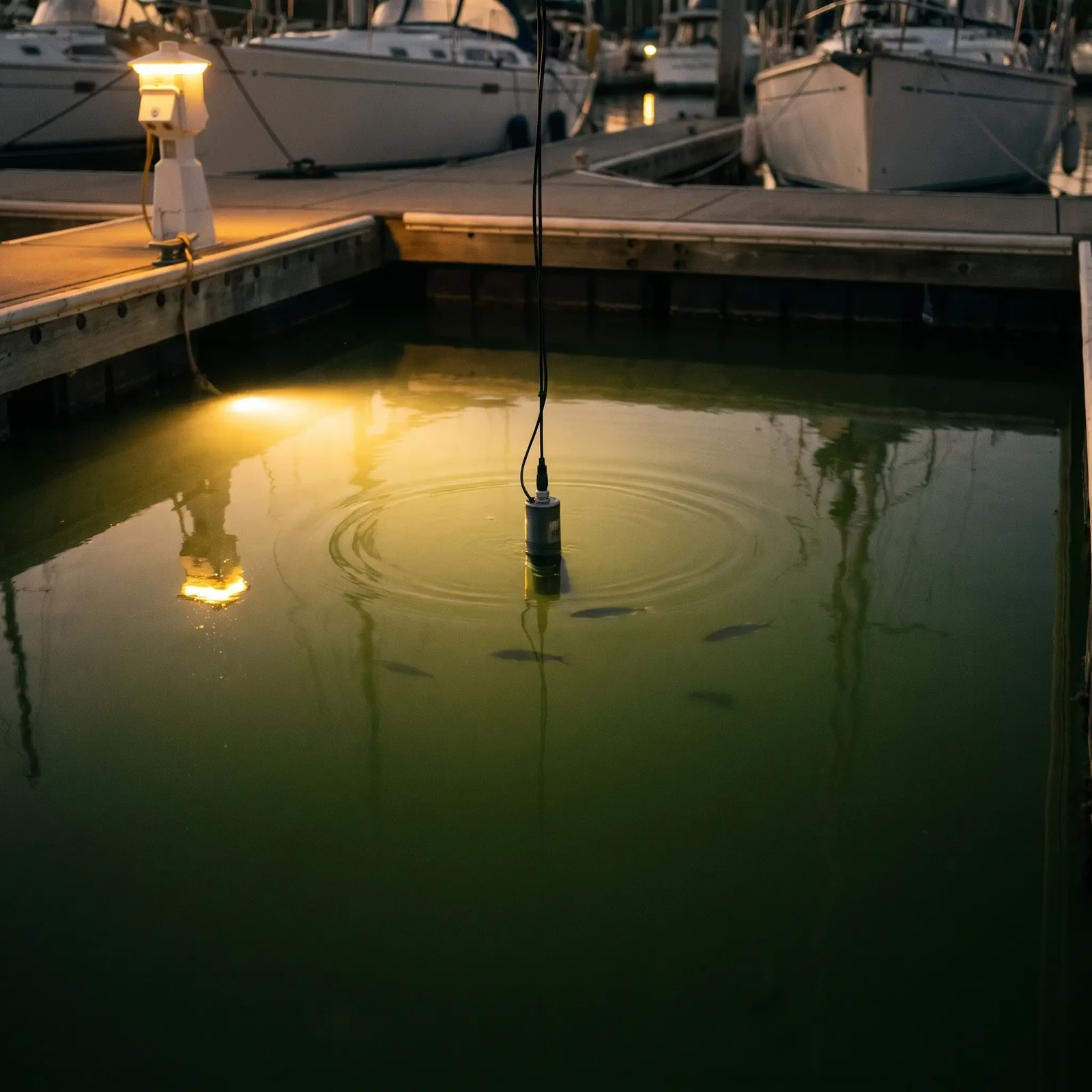
What you see
The dissolved-oxygen reading looks lower than expected in quiet water. Move the probe, stir the water or wait for local flow to increase, and the reading changes.
That does not automatically mean the sensor is defective, or that the low reading was false. But before interpreting it as an environmental condition, I would check whether water movement is influencing the measurement.
Why it happens
Galvanic and polarographic membrane sensors, including Clark-type electrodes, use an electrochemical reaction. Oxygen passes through a membrane and is consumed at the electrode during measurement.
In still water, oxygen immediately beside the membrane can become locally depleted. If fresh water is not moving past it quickly enough, the sensor can read lower than the surrounding water actually is. This is the measurement principle’s known stirring or flow dependence.
Optical dissolved-oxygen sensors use luminescence quenching and do not consume oxygen during measurement. They therefore do not share that oxygen-consuming electrode’s stirring requirement.
They are not maintenance-free. The optical sensing cap can foul, ages in service and needs servicing or replacement according to the instrument’s requirements.
How to tell
Start with a controlled comparison: observe the membrane sensor in still water, then introduce controlled stirring or movement. A meaningful change associated with movement is worth investigating. Keep the comparison conditions documented rather than treating any increase as proof.
Then compare against a Winkler titration or a freshly calibrated optical DO reference sensor. An independent reference helps test the explanation; one comparison alone does not settle every question about the water.
Review the time series, particularly the night-time minimum. Respiration can genuinely lower dissolved oxygen at night. The task is to separate environmental behaviour from sensor and flow behaviour—not to explain away every low value as an instrument effect.
What to do
Choose the measurement principle with the hydrodynamic environment in mind. An enclosed marina, lagoon or sheltered low-flow location presents different conditions from an open coast or naturally well-flushed location. Neither sensor type is universally superior; the choice needs to suit the water movement and maintenance arrangements.
Use a wiper where supported, a suitable guard and a cleaning or service interval appropriate to the instrument and conditions. Inspect the membrane or sensing surface and, for optical instruments, the cap. Follow the instrument’s maintenance requirements rather than assuming a clean-looking installation needs no attention.
Record the sensor type in the station metadata: galvanic, polarographic/Clark-type or optical. The next analyst should not have to guess which measurement principle produced the number.
What stays unresolved
A stirred comparison helps examine the sensor’s response. It does not replace an undisturbed record of the conditions we actually want to understand.
What does night-time DO at reef depth look like when no one is there to stir anything?